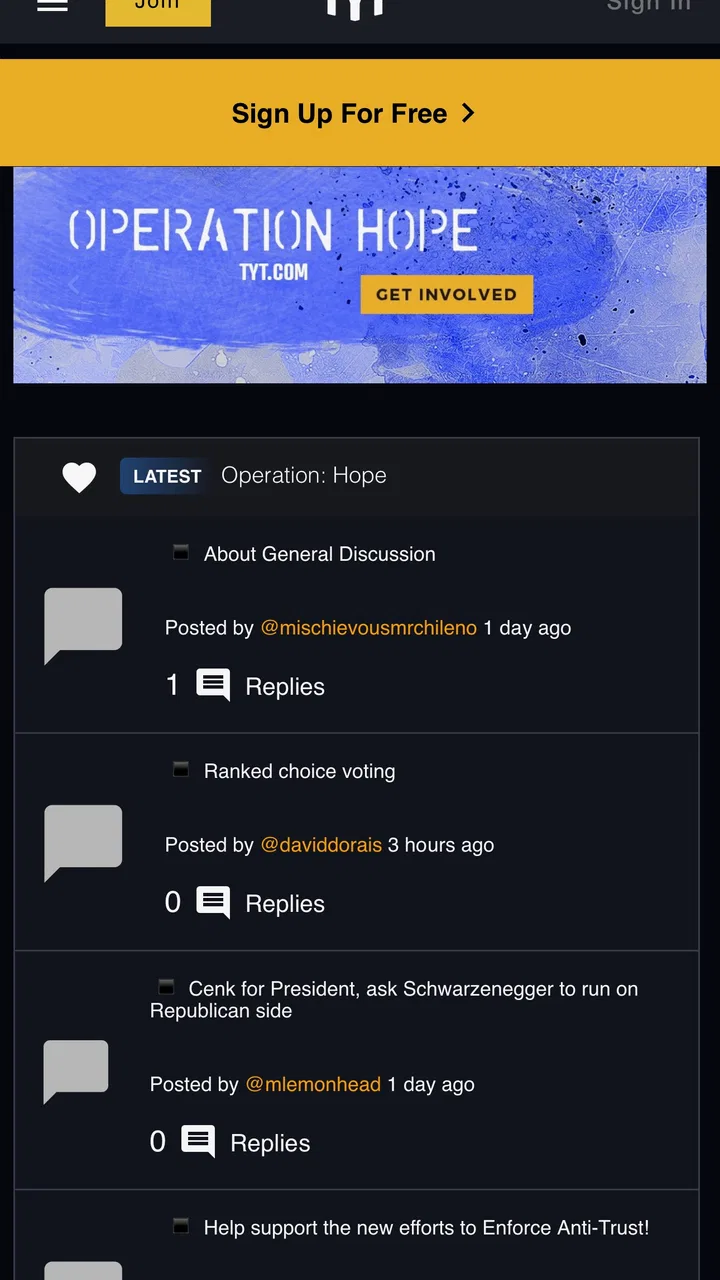
TYT - Home of Progressives
- 3.7
- Rating
- 100.00K
- Installs
- Free
- Price

 Analysis by App-foxy
I found TYT - Home of Progressives most useful as a focused way to keep up with progressive talk and news when I wanted something more direct than a general news feed. It is a free News & Magazines app from TYT, and the main appeal is clear from the moment I open it: this is built around a particular editorial voice rather than an attempt to cover every possible source equally.
That focus can be a real advantage in a busy household. One person may want political commentary while another is looking for local headlines, sports, or a broader mix of viewpoints. I would not treat this app as a complete shared news solution for everyone in the home, but it can fit well as one person’s regular news destination, especially when the household understands what it is designed to provide.
How TYT fits into everyday shared use
My most realistic use case is a shared phone or tablet in a kitchen or living room. I might open the app while having breakfast, listen or read for a while, then hand the device to someone else who has a different routine. In that situation, the app works best when each person treats it as a personal source of commentary and news rather than as a neutral household bulletin board.
You May Also Like

 Blood Strike: 2.5 Anniversary
Blood Strike’s Loadouts Turn Every Drop Into a Tactical Gamble
A close look at Blood Strike’s custom loadouts: how fast access to signature weapons reshapes its battle royale rhythm, rewards preparation, and narrows the gap between fights.

 Pandora - Music & Podcasts
Pandora’s Music Is Easy to Start, but Harder to Recover
Pandora’s strength is its low-effort path from a seed to a station. Its weak spot is how much confidence it asks you to place in connection, setup, and quiet recovery.

 8 Ball Pool
 Is Built on Rivalries, Rematches, and Routine
A close look at the rivalries, rematches, shared routines, and unanswered safety questions that turn a quick pool match into a persistent mobile community.

 Samsung Music
’s Quiet Strength Is Playing What You Already Own
Its reach comes less from spectacle than from dependable access to a personal library. That simplicity is both the app’s strongest retention engine and its ceiling.

 AccuWeather: Weather Radar
AccuWeather Review: A Quick, Clear Forecast for Everyday Decisions
For everyday plans, the best forecast is the one you can understand quickly. AccuWeather makes rain timing, radar, and local conditions easy to act on, with a few trade-offs.

 Hill Climb Racing
Why Hill Climb Racing Still Turns Crashes Into One More Run
A tiny car, a bumpy hill and one more upgrade: Hill Climb Racing keeps resurfacing because its simple chaos makes every near-miss feel personal.
More From Our News Desk



The distinction matters because TYT has a recognizable progressive perspective. That does not make it unsuitable for shared use, but it does mean that family members should know what they are opening before they rely on it for a complete picture. I would pair it with a general news app, a local news source, or direct reporting from outlets with different editorial approaches if the goal is broad awareness.
For a single user, the focused identity is easier to appreciate. I can open the app with a particular expectation instead of sorting through an endless mixture of celebrity stories, shopping content, sports updates, and unrelated alerts. The trade-off is that the experience may feel narrow if I want a neutral headline dashboard or a wide range of international coverage in one place.
There is also a practical household issue: a shared device can blur who is using an app and why. I would avoid assuming that another person will interpret a commentary segment in the same way I do. A short conversation such as “this is an opinion-focused progressive source” is more useful than presenting it as the only news option available.
What I would do before handing over the device
I would first decide whether the tablet is being used for quick personal reading or as a communal screen. For personal use, I can simply open TYT when I want its style of coverage. For communal use, I would place it alongside other news choices rather than making it the default source for every person in the household.
A helpful workflow is to use TYT for analysis and discussion, then check a separate source for the basic event details. That keeps the app’s strongest quality—the distinct point of view—from being mistaken for a complete replacement for every other kind of reporting. It also gives children or less politically engaged relatives a clearer context if they encounter the app accidentally.
I would not promise that this approach removes every disagreement. It simply makes the boundaries visible. In my experience, shared devices work better when people know which app is opinion-led, which one is intended for quick headlines, and which one is used for local information.
Setup, account boundaries, and the first impression
TYT is free to install, which makes trying it straightforward. The app was released on July 24, 2018, and its presence on Android is established, with more than one hundred thousand installs. Its average rating is 3.7 from roughly two thousand four hundred ratings, alongside about one thousand written reviews. I read that combination as a sign of a useful but not universally smooth experience: enough people return to it for the concept to work, while the rating suggests that expectations and day-to-day usability vary.
The age classification is Everyone, which makes the app easy to consider for a household device from an access standpoint. I would still separate an age label from a promise that every political discussion will suit every child. News and commentary can involve difficult subjects, heated language, or ideas that need explanation even when an app is broadly accessible.
When setting it up for shared use, I would keep account boundaries in mind. I would not assume that one person’s preferences, saved material, or viewing habits should automatically become the household’s shared history. If several people use the same device, a personal phone or separate user profile is cleaner whenever that option is available on the device itself.
That is not a special TYT feature; it is simply sensible device management. I would also avoid leaving the app open on a politically sensitive segment if children or guests regularly pick up the tablet. The app’s subject matter makes this small habit more important than it would be with a general weather or recipe application.
The free entry point is another reason it can work as a trial. I can test whether the editorial tone suits me without committing money immediately. At the same time, the app includes in-app purchases ranging from $4.99 to $9.99 per item. I would check the purchase screen carefully before confirming anything, particularly on a shared device where another household member might tap through without realizing that an optional payment is involved.
For families, the practical lesson is simple: free installation does not necessarily mean every part of the experience is cost-free. I would keep purchase approval with the person who manages the device and explain that optional items are not the same as the basic download. That small boundary prevents an avoidable surprise.
Where the app sits beside ordinary news alternatives
Compared with a large general-news aggregator, TYT feels more deliberate and less like a wall of unrelated headlines. That can save time when I already know I want progressive commentary. A mainstream headline app is usually better when I need quick comparison across many subjects, while a local publication is more useful for school closures, transport changes, neighborhood issues, and nearby events.
Compared with watching a full television news channel, a mobile app is easier to fit into short gaps in the day. I can check it during a commute break or while waiting for an appointment instead of planning around a broadcast schedule. The drawback is that a phone screen encourages quick consumption, so I need to slow down and distinguish reporting, analysis, and reaction rather than treating every item as the same kind of information.
Compared with social media, TYT offers a more intentional destination. I am less likely to be pulled immediately into a random stream of unrelated posts. Still, I would not use any single commentary app as my only way to verify a breaking story. Social platforms can be noisy, but they also expose me to different sources; TYT is more coherent, yet its coherence comes from its defined perspective.
Coordination: making one news app work for several people
Coordination is where a shared installation either becomes convenient or frustrating. I would agree on a basic household rule: TYT is available for anyone who wants it, but it is not the sole news source for a shared screen. That rule respects the app’s identity while leaving room for people who prefer a different tone or wider coverage.
A second useful habit is to say what kind of item is being discussed. If I mention that I heard a point on TYT, I would describe it as commentary or analysis when that is what it was, rather than presenting it as an uncontested fact. This wording sounds minor, but it prevents arguments caused by different assumptions about what the app is meant to do.
On a family tablet, I would also avoid interrupting someone else’s routine with a long political segment unless they have chosen to listen. News apps can be personal in a way that weather apps are not. One person may find a discussion informative, while another may find the same topic stressful or simply irrelevant at that moment.
For couples or roommates, the app can become a useful conversation starter if both people understand that they are entering a particular editorial environment. I would use it to hear arguments, identify subjects I want to investigate, and then compare those subjects with other reporting. I would not use it to settle a disagreement by saying that the app’s interpretation is automatically the final word.
One non-obvious advantage of this approach is that it turns the app into a deliberate filter rather than an accidental household default. I can choose it when I want progressive discussion, then switch sources when I need local facts, a different viewpoint, or a simple event timeline. That makes the app more valuable than trying to force it into a role it was never meant to fill.
A practical routine for a busy day
Imagine that I have ten minutes before work and want to understand the political conversation of the day. I would open TYT for the perspective and topics, note any claims or events worth checking, and later consult a broader or more directly reported source for confirmation and context. At dinner, I could summarize what I learned without assuming that everyone else wants the same feed.
On a shared device, I would close the app when finished instead of leaving a discussion paused on screen. If another person wants to use it, they can make that choice themselves. This is especially considerate when the household includes younger users, visitors, or people who prefer not to encounter political content unexpectedly.
Another useful trade-off is time. A focused app can reduce the effort of finding material that matches my interests, but it can also make it easy to stay inside one editorial lane. I would set a personal stopping point and deliberately seek a second source when a story affects a practical decision, such as travel, school, work, or household finances.
Age, trust, and choosing the right audience
The Everyone rating makes TYT broadly approachable, but I would still judge suitability by maturity and context rather than by the label alone. A teenager who is interested in current affairs may appreciate having a place to explore progressive arguments. A younger child may need an adult nearby to explain political references, emotional language, or the difference between a presenter’s interpretation and a verified event.
For adults, trust should be active rather than automatic. I like having a clear editorial voice because it gives the content personality and makes it easier to know what kind of perspective I am hearing. At the same time, a clear perspective is precisely why I would compare important claims with other sources. Trusting an app does not mean outsourcing judgment to it.
This is also why I would be cautious about using TYT as the only news source for someone who is just learning how to evaluate media. The app can be part of a healthy information routine, but it should sit beside lessons in checking dates, distinguishing facts from opinions, and looking for original reporting. Those skills matter more than loyalty to any one outlet.
For a household with different political views, the app may work better as an opt-in choice than as background entertainment. I would not play it continuously in a common room without considering whether everyone wants to hear it. Personal headphones or individual use can preserve the value of the content without turning the shared space into an unwanted debate.
There is a trust benefit in being honest about the app’s boundaries. I can recommend it to a friend who wants progressive talk and news, while also saying that it is not my first choice for comprehensive local coverage or a deliberately mixed news digest. That is a more useful recommendation than calling it universally suitable.
Who will appreciate it, and who should look elsewhere
I would recommend TYT to someone who actively wants progressive commentary, prefers a focused political destination, and is comfortable building a broader news routine around it. It also suits an adult who wants to explore arguments and topics during short breaks without opening a general-purpose social feed.
I would steer a reader toward a different category of app if the main need is local alerts, impartial headline comparison, family-friendly educational content, or a single dashboard covering weather, sports, business, and world news. TYT’s strength is its identity, so people who dislike strongly framed political discussion may find the experience less comfortable than a wire-service reader or a neutral aggregator.
I would also skip it as a shared household default if family members have sharply different expectations about political content. The app can still be installed for individual use, but making it the central screen for everyone is likely to create friction. In that situation, a general news app on the communal device and TYT on personal devices is the more considerate arrangement.
My household verdict after using it
TYT is a worthwhile free option when I want progressive talk and news in a focused mobile setting. Its value comes less from trying to be everything and more from giving a particular audience a consistent place to follow political discussion. The developer, TYT, has made the app easy to try, and the existing user response—an average of 3.7 from around two thousand four hundred ratings—suggests that it works well for some readers while leaving room for frustration among others.
I would keep it on my personal device if I wanted that perspective regularly. On a shared tablet, I would treat it as one choice among several, keep purchase boundaries clear, and avoid assuming that the Everyone age label makes every discussion appropriate for every child or every room in the house.
The most important adjustment is to use it consciously. Open it when you want its progressive editorial lens, identify whether you are hearing reporting or analysis, and compare consequential claims elsewhere. That workflow lets the app do what it does well without asking it to replace local journalism, broad headline coverage, or a balanced media diet.
My recommendation is conditional but positive: TYT is a good fit for adults and older, media-aware users who want progressive commentary, while households seeking one neutral, all-purpose news app should choose a broader alternative. Used with clear account and content boundaries, it can be a useful personal news companion without becoming an awkward default for everyone sharing the device.
FAQs for TYT - Home of Progressives
01What is TYT – Home of Progressives?
TYT – Home of Progressives is a news and political commentary app from The Young Turks network. It provides access to progressive-focused video shows, live programming, interviews, podcasts, and discussions about current events, politics, culture, and social issues. The app is designed for users who want opinionated analysis and commentary from a progressive perspective rather than a traditional, strictly neutral news format.
02What kind of content can I watch in the TYT app?
The app typically includes live and on-demand episodes from TYT programs, political commentary, news analysis, interviews, podcasts, and clips covering major national and international stories. Content may also include discussions about elections, policy, media, social justice, and popular culture. Availability can vary by region, platform, subscription level, and the current TYT programming schedule.
03Is TYT – Home of Progressives free to use?
TYT offers some content that can be accessed without paying, but the exact selection may change over time. Certain live streams, full episodes, archives, or premium features may require a subscription or an in-app membership. Before downloading, users should review the current pricing, trial terms, renewal conditions, and available plans through the official app store to understand what is included.
04Does the app require an account or subscription?
You may be able to browse or watch selected TYT content without creating an account, but signing in can be necessary for personalized access, saved content, premium programs, or subscription benefits. If you choose a paid plan, check whether it renews automatically and confirm the cancellation procedure for Android or iOS. Subscription features and account requirements may differ depending on your location.
05Is TYT suitable for everyone, and what should I know before downloading it?
TYT is aimed at adults and older audiences interested in progressive political news, commentary, and debate. Because the programming discusses controversial topics, elections, public figures, and social issues, some episodes may contain strong opinions, sensitive subjects, or mature language. The app is best suited to viewers comfortable with openly partisan analysis and should be used with awareness that commentary is not the same as neutral reporting.
Pros
- Live coverage and clips focused on progressive political perspectives.
- Easy access to shows
- podcasts
- and TYT network content in one app.
- Video content is organized for quick browsing and on-demand viewing.
- Useful notifications can help you keep up with breaking political stories.
- Supports users who prefer independent commentary over traditional news outlets.
Cons
- The strongly progressive viewpoint may feel one-sided to some viewers.
- Some content and features may require a paid membership or subscription.
- Political videos can be lengthy and less convenient for quick updates.
- Availability and playback quality may vary by device or internet connection.
- Frequent notifications may become distracting if not adjusted in settings.

TYT - Home of Progressives
Gallery